Prostir

Research-backed article

AI agent security audit checklist before launch

An AI agent security audit checklist must test the whole product boundary—not only the prompt—before the system receives real identities, tools, data, payments, or customers. Prostir's first external review used three approved phases and found eight vulnerabilities, including one critical issue with direct business impact.

Before you read

What gets published

A practical phased review, remediation, and retest plan grounded in Prostir's first external security audit without publishing exploit details.

Best for

Founders, product owners, and technical teams preparing an AI agent or AI platform for real users.

Where the work happens

AI agent security audit · Penetration testing · Access control · Launch checklist

01

What the audit must cover

Audit the application and the agent together: identity, authentication, authorization, tenant isolation, data access, MCP and API tools, memory, uploaded content, payment flow, secrets, logs, limits, approval, and recovery. A safe prompt cannot compensate for a broken access check or payment path.

Set written scope, test identities, allowed methods, hours, stop conditions, evidence handling, and owner approval before active work. Never point an automated scanner or exploitation attempt at a live platform without explicit authorization.

Treat the result as a dated risk snapshot, not a certificate of absolute security. Fix by business impact, retest the exact behavior, and repeat after material changes to access, tools, memory, payments, models, or infrastructure.
02

The three phases used for Prostir

  1. 01
    Passive reconnaissance

    Review DNS, subdomains, public OSINT, and technology fingerprints without sending requests to the platform servers. The goal is to map exposed assumptions before touching the authorized surface.

  2. 02
    Active reconnaissance

    Within the approved scope, inspect ports, headers, endpoints, and scanner signals. Confirm findings manually so a noisy tool result does not become a false vulnerability claim.

  3. 03
    Application testing

    Use ordinary-user paths and evidence-based hypotheses to test authentication, payment flow, access control, and product logic. Each phase begins only after the owner accepts the previous report.

03

What Prostir can publish safely

The first review was performed by Ruslan Siniaiev and documented eight vulnerabilities; one was critical because it could affect the business directly. The profile link on this Article goes to Ruslan's LinkedIn.

Every phase produced a PDF report with reproduction steps and evidence. The public lesson is the review method and the decision discipline—not the affected endpoints, exploit chain, credentials, or remediation details.

Using AI to develop a product can accelerate delivery, but plausible code can still hide authorization and logic defects. Independent review, owner confirmation, remediation, and retesting remain human responsibilities.

04

Turn findings into a launch gate

A report creates value only when each finding has an owner, a release decision, and evidence that the fix works.

  1. 01
    Triage by business impact

    Record affected asset, required access, likely impact, reproducibility, compensating controls, owner, and deadline; stop release for unresolved critical exposure.

  2. 02
    Fix the owning boundary

    Correct authorization, validation, state, payment, data, tool, or infrastructure ownership at its source instead of hiding the symptom in UI copy or a prompt.

  3. 03
    Retest and keep evidence

    Re-run the exact reproduction, nearby abuse cases, and regression path, then preserve the dated result and residual-risk decision without exposing sensitive details.

05

Where Prostir fits

Prostir lets creators build, monetize, and deploy owned Agents without writing the surrounding SaaS backend. That shortens product work; it does not remove the need to verify the resulting access, tools, data, payment, and business logic.

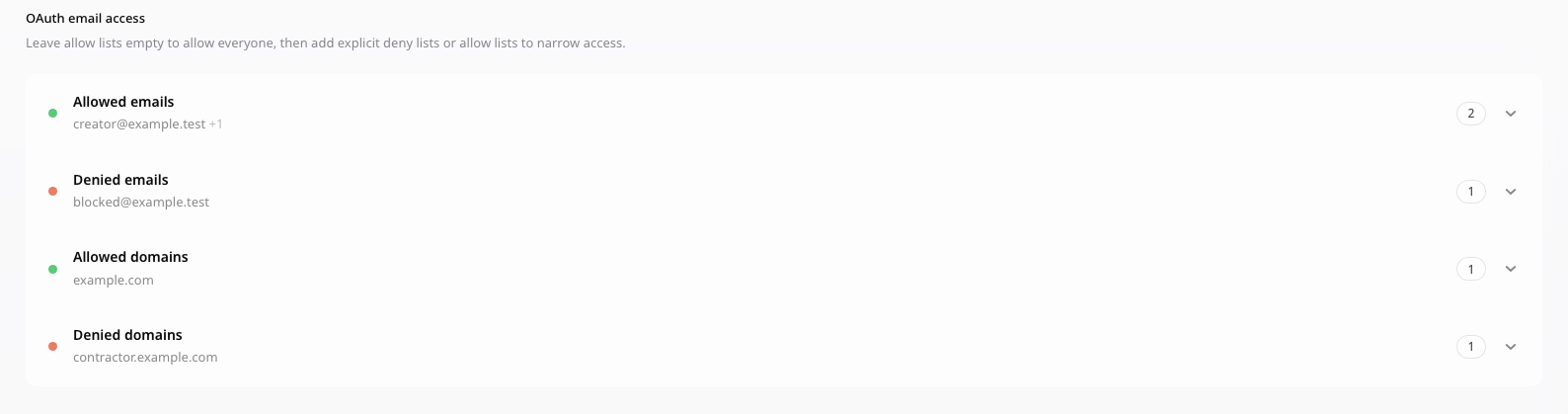
New Agents are private by default, with OAuth-first access, explicit scoped alternatives, exact product ownership, and bounded tools. Those controls are security claims to test, not reasons to skip testing.

The first external audit made concrete risks visible before broader release. Remediation and independent retesting are the next evidence, and vulnerability details stay private until disclosure is safe and authorized.

Solutions

AI agent builder for a product you actually own

Create one Agent that stays under your control, can work as a prompt Agent or coordinate owned Agents as a Workflow Agent, and can be published privately on its own HTTPS address and MCP endpoint.

Solutions

Turn the useful demo into an owned Agent

Tell us the job, the people who should use it, and the knowledge or tools it needs. We will help you map the first honest Agent scope.